EPDM vs TPO vs Modified Bitumen: What’s Best for Your Commercial Roof in Ontario?
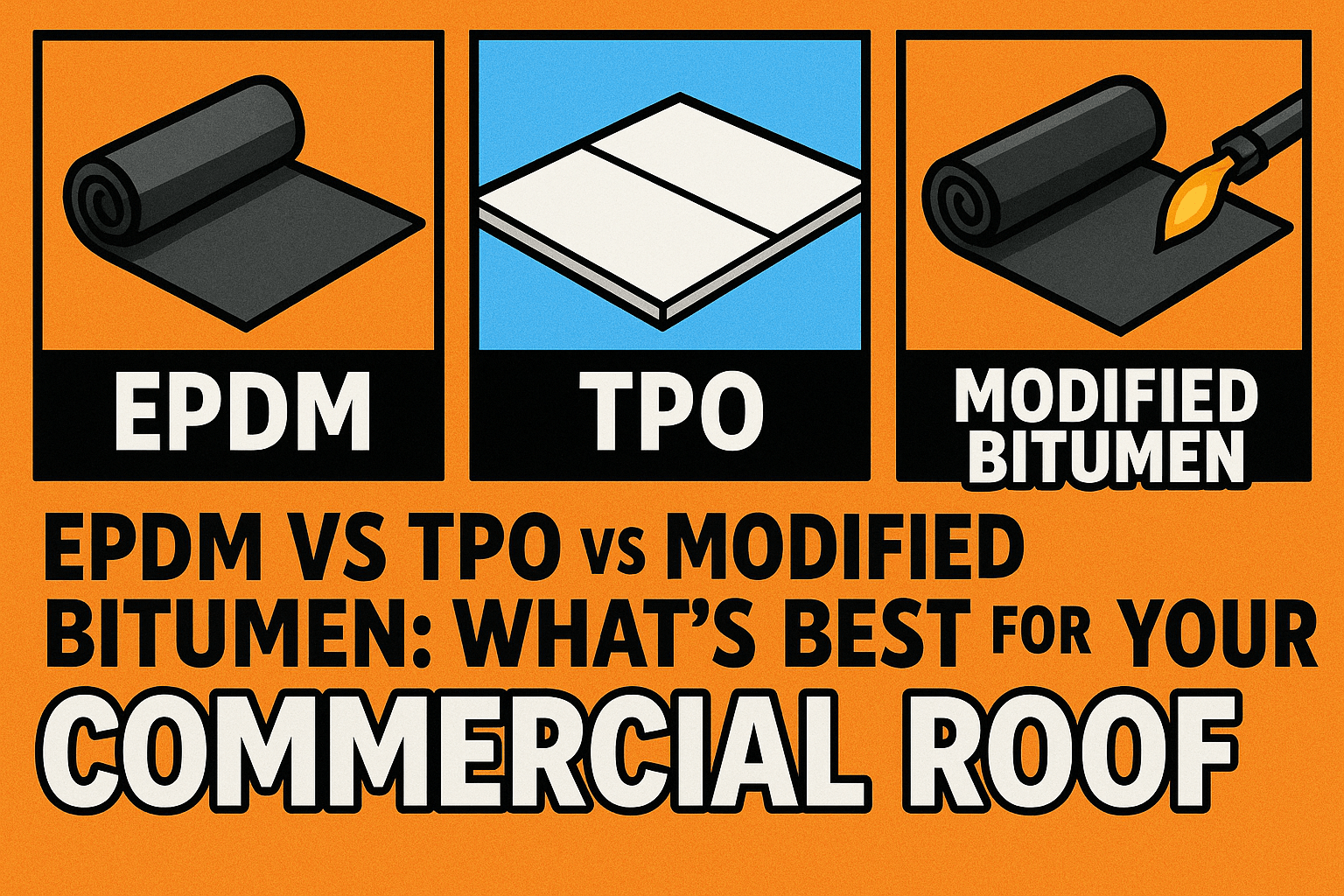
Choosing the right roofing material for your commercial building in Ontario is a decision that affects not only your budget but also long-term performance, energy efficiency, and maintenance needs. Three of the most popular flat roofing systems on the market today are EPDM, TPO, and Modified Bitumen.
But which one is right for your building, climate, and budget?
Let’s break down the pros and cons of each so you can make an informed decision for your next commercial roofing project.
Overview:
EPDM is a synthetic rubber membrane known for its durability and flexibility. It’s been a popular flat roofing option in Ontario for decades.
Pros:
Cons:
Best For:
Buildings in colder regions of Ontario where flexibility in freezing conditions is critical.
Overview:
TPO is a single-ply roofing membrane that has gained popularity due to its reflective properties and energy efficiency.
Pros:
Cons:
Best For:
Energy-conscious commercial buildings in Ontario that want to reduce summer cooling costs.
Overview:
Modified Bitumen is an asphalt-based roofing system reinforced with either polyester or fiberglass. It is typically installed in multiple layers.
Pros:
Cons:
Best For:
Property owners seeking a proven, rugged roofing system that can withstand the variable Ontario climate.
Ontario’s weather presents unique challenges:
Because of this, durability, seam integrity, and energy efficiency should all be weighed carefully. EPDM performs well in cold weather, TPO is ideal for reflecting heat, and Modified Bitumen offers rugged durability in all seasons.